






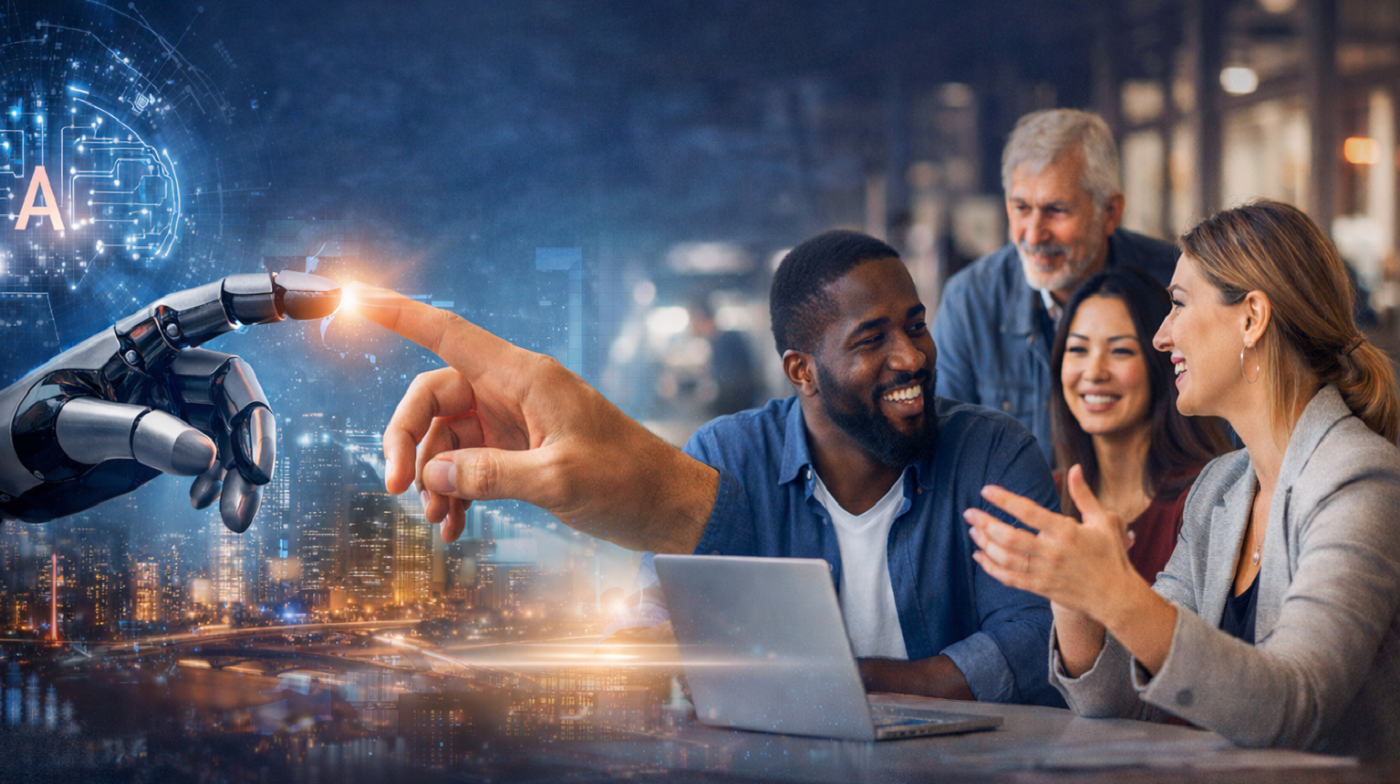
As AI becomes part of everyday work, one truth is becoming clearer: high-performing teams are not defined by technology alone. They are defined by people.
A new study by Deloitte reinforces this idea. The report shows that even in an AI-driven world, the teams that consistently deliver strong results rely on deeply human capabilities—curiosity, resilience, critical and divergent thinking, emotional intelligence, adaptability, and strong collaboration. AI may change how work gets done. But it does not change what makes teams succeed.
What the Study Looked At
Deloitte surveyed 1,394 employees across industries and roles. Both team leaders and team members were asked whether they were part of a high-performing team—defined as a team that consistently meets or exceeds expectations over time—and what behaviors and conditions made those teams successful.
Across generations, job levels, and industries, the response was consistent: human-centric skills are foundational to performance.
What Sets High-Performing Teams Apart
The data shows that high-performing teams do use AI more than others. But their biggest advantage lies in how they work together.
Members of high-performing teams are:
2.3 times more likely to feel trusted by their leaders
2.3 times more likely to feel respected and valued by peers
1.5 times more likely to feel included
Emotional and social intelligence emerged as the single most important factor behind team success. When people feel safe, respected, and heard, performance follows.
Nearly 40% of high-performing teams promote a culture of apprenticeship, compared to just 15% in other teams
68% say they actively help each other learn and grow
More than half see everyday work as an opportunity to learn from colleagues
Learning is embedded in the flow of work—not confined to training sessions.
AI Helps—But Only When Teams Are Ready
High-performing teams are far more likely to use AI tools (78% versus 54%). More importantly, they use AI to enhance human strengths.
They report:
Better efficiency (93% vs. 77%)
Stronger problem-solving (88% vs. 71%)
Improved collaboration (79% vs. 57%)
AI amplifies results when trust, clarity, and collaboration are already in place.
As Dave Rizzo notes, winning with AI requires investing in both technical skills and human capabilities that technology cannot replace. Adaptability, connected teaming, and critical thinking are not optional—they are what unlock real value.
Where Even Strong Teams Struggle
The report also highlights gaps that can limit performance, even in high-performing teams.
Leader–Team Disconnect
Leaders are far more likely than team members to believe they understand how individuals contribute to success (67% vs. 52%).
Among employees in lower-performing teams, only 29% feel clear about how their work matters.
Clarity of contribution remains a major blind spot.
Training Imbalance
While 67% of respondents believe human skills will become more important in the next two years, only 42% strongly agree that their organizations invest equally in technical and human skill development.
Human skills cannot be built through theory alone. They need practice, feedback, and repetition.
Innovation Without Safety
Only 37% of high-performing team members say their teams actively explore new ideas.
Just half say their teams learn from failure without focusing on blame.
Without psychological safety, innovation stalls—even in strong teams.
A Human-Led, AI-Powered Blueprint
One of the most important findings from the study is this: there is no single structure for a high-performing team. They exist across industries, sizes, and organizational models.
What they share is balance.
Leaders who succeed in the AI era:
Invest equally in human and technical skills
Design work to encourage learning and mentorship
Build trust before pushing transformation
Use AI to support people—not replace judgment
Structured learning programs, human-centered work experiences, and cultures of apprenticeship help teams strengthen trust, collaboration, and innovation over time.
As Simona Spelman puts it, in a world of constant disruption, the most durable competitive advantage is a workforce that can keep learning and adapting. Technology enables speed—but people determine direction.
The Bottom Line
AI may define the next phase of work.
But human capabilities will define who wins.
Organizations that treat trust, curiosity, and collaboration as strategic assets will not just perform better today—they will be ready for whatever comes next.Is this conversation helpful so far?







Leave a comment