The Pillars of Autonomous Monitoring: Data, AI, and Workflow Integration
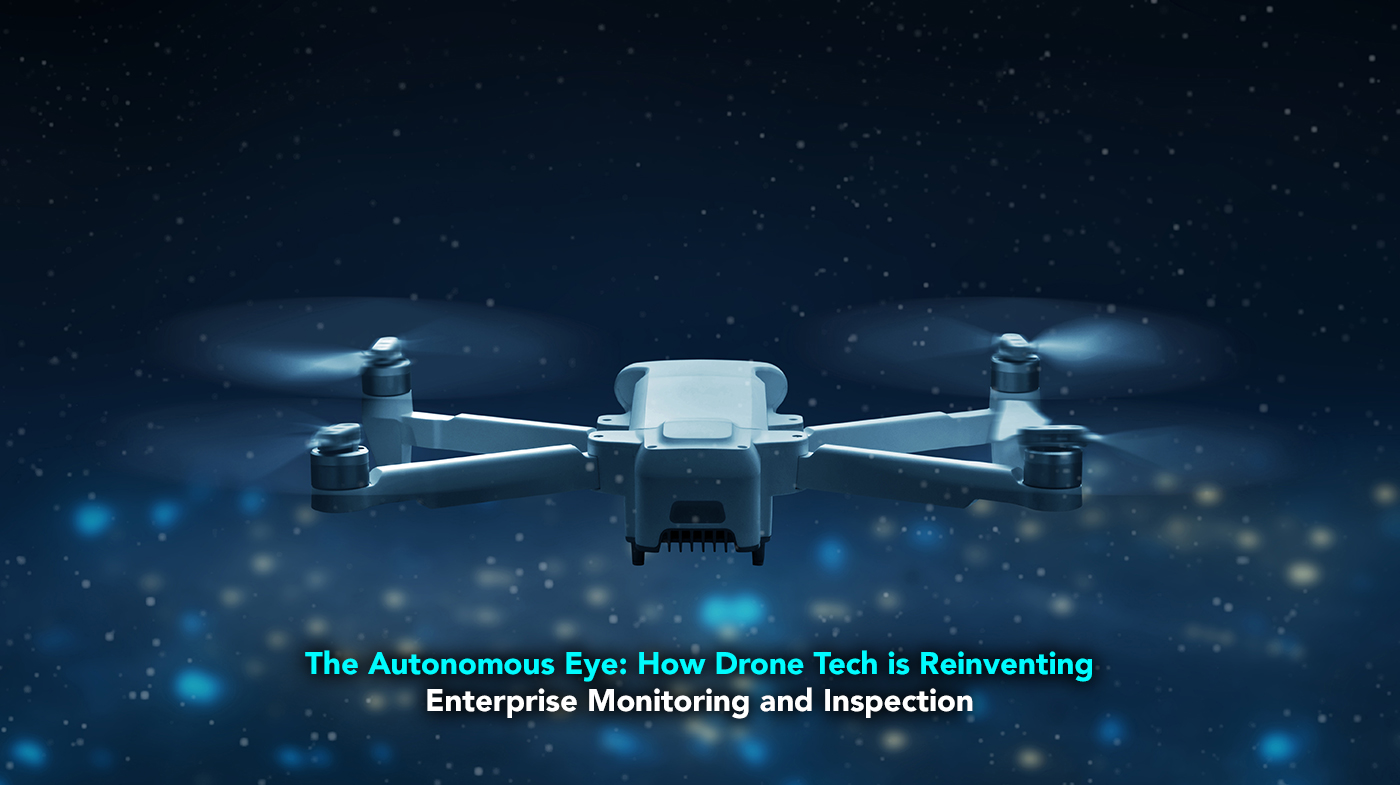
The true power of autonomous drones is unlocked through a tripartite framework: consistent data capture, intelligent analysis, and seamless workflow integration.
- Consistent and Comprehensive Data Capture:
Autonomous drones are equipped with a suite of sensors far beyond standard RGB cameras. Multispectral and thermal sensors can detect plant health in agriculture, identify heat leaks in solar farms, and pinpoint insulation failures in building envelopes. LiDAR sensors can create highly accurate 3D point clouds of complex structures like industrial plants or mining sites, allowing for volumetric measurements and digital twin creation. By autonomously collecting this rich, multimodal data at regular intervals, enterprises build a robust historical dataset that serves as a single source of truth.
- Artificial Intelligence and Machine Learning at the Edge:
The volume of data collected by a fleet of autonomous drones is immense. Manual analysis would be impractical and unscalable. This is where Artificial Intelligence (AI) and Machine Learning (ML) become force multipliers. AI models can be trained to automatically detect anomalies—such as cracks in concrete, corrosion on pipelines, or unauthorized personnel in a secured area.
Increasingly, this processing is happening “on the edge,” directly on the drone or its base station. This allows for real-time decision-making. For instance, a drone inspecting a railway line can identify a potential obstruction and alert control centers immediately, rather than hours after the flight is complete. This transition from data collection to intelligent insight is where the majority of business value is concentrated.
- Seamless Integration into Enterprise Workflows:
Raw data, even when intelligently analyzed, must flow into existing business systems to drive action. Modern drone platforms offer Application Programming Interfaces (APIs) that integrate directly with enterprise asset management (EAM) systems, computerised maintenance management systems (CMMS), and GIS platforms. When an AI algorithm identifies a critical fault in a wind turbine blade, it can automatically generate a work order in the CMMS, assign it to a maintenance team, and even pre-order the necessary parts. This closed-loop system turns a remote observation into an initiated business process, drastically reducing mean time to repair (MTTR) and preventing costly downtime.
Enterprise Applications Driving Tangible ROI
The applications for autonomous drone monitoring are vast and cross-sectorial.
- Energy and Utilities: For oil and gas refineries, drones autonomously patrol miles of pipeline for right-of-way encroachment and leaks. In the renewable sector, they perform blade inspections on wind turbines and panel-level diagnostics on solar farms, identifying defects without the need for risky rope-access teams or shutting down entire sections of the facility.
- Construction and Infrastructure: On large-scale construction sites, autonomous drones fly daily progress monitoring missions, creating up-to-date 3D models that are compared against BIM (Building Information Modeling) blueprints. This allows project managers to track progress, manage earthworks volumes, and identify deviations early, saving millions in rework. For public infrastructure like bridges and railways, they enable frequent, detailed structural inspections without the need for disruptive and dangerous lane closures or track possessions.
- Mining and Aggregates: Autonomous drones are revolutionizing site management by performing daily volumetric surveys of stockpiles and excavation sites. The data provided is far more accurate and safer than traditional survey methods, enabling precise inventory management and operational planning. They also monitor slope stability and ensure compliance with safety regulations.
- Agriculture and Land Management: In precision agriculture, drones autonomously fly over thousands of acres, using multispectral sensors to generate NDVI (Normalized Difference Vegetation Index) maps. These maps precisely identify areas of stress, disease, or irrigation issues, enabling targeted intervention that optimizes water, fertilizer, and pesticide use, thereby boosting yield and sustainability.
Navigating the Airspace: Regulatory Compliance and the Future
The widespread adoption of autonomous operations, particularly Beyond Visual Line of Sight (BVLOS), is intrinsically linked to evolving regulatory frameworks. Enterprises must partner with technology providers who prioritize compliance and are actively engaged with aviation authorities to shape the standards for safe, scalable drone operations. The future points towards Unmanned Traffic Management (UTM) systems, where autonomous drones will operate as integrated nodes in a complex airspace, communicating with each other and air traffic control to ensure seamless and safe coexistence with manned aviation.
The integration of autonomous drone systems is no longer a speculative experiment but a strategic imperative for asset-intensive industries. By automating the monitoring of critical infrastructure, enterprises are not just replacing old methods; they are fundamentally upgrading their capability to perceive, understand, and act upon their physical operations. The result is a powerful synergy of enhanced safety, radical operational efficiency, and data-driven decision-making that directly impacts the bottom line. In the competitive landscape of the 21st century, the autonomous eye in the sky is becoming a indispensable tool for building a smarter, safer, and more resilient enterprise.






 dtcDecember 4, 20252.8k